
printhead type
Kyocera Printheads
Kyocera KJ4A and KJ4B series printheads for industrial inkjet applications, including textile printing, UV label and packaging production, and aqueous single-pass systems.
Confirm compatibility by printer model, part number, dimensions, connector, and ink chemistry before quotation.
Explore our range of Kyocera printheads designed for high-speed industrial inkjet applications, including textile printing, UV label and packaging production, and aqueous single-pass printing systems.
Featuring 2,656 nozzles, 600 dpi resolution, built-in filters, and reservoir heaters, the Kyocera KJ4A and KJ4B series printheads provide consistent ink delivery and reliable performance for continuous production.
Browse the Kyocera print heads below, or search by your printer model or printhead designation, such as KJ4A-0300, KJ4A-RH, KJ4A-AA, KJ4A-TA, KJ4B-0300, or KJ4B-QA, to find the right industrial printhead for your printing system.
Matching products
9 products
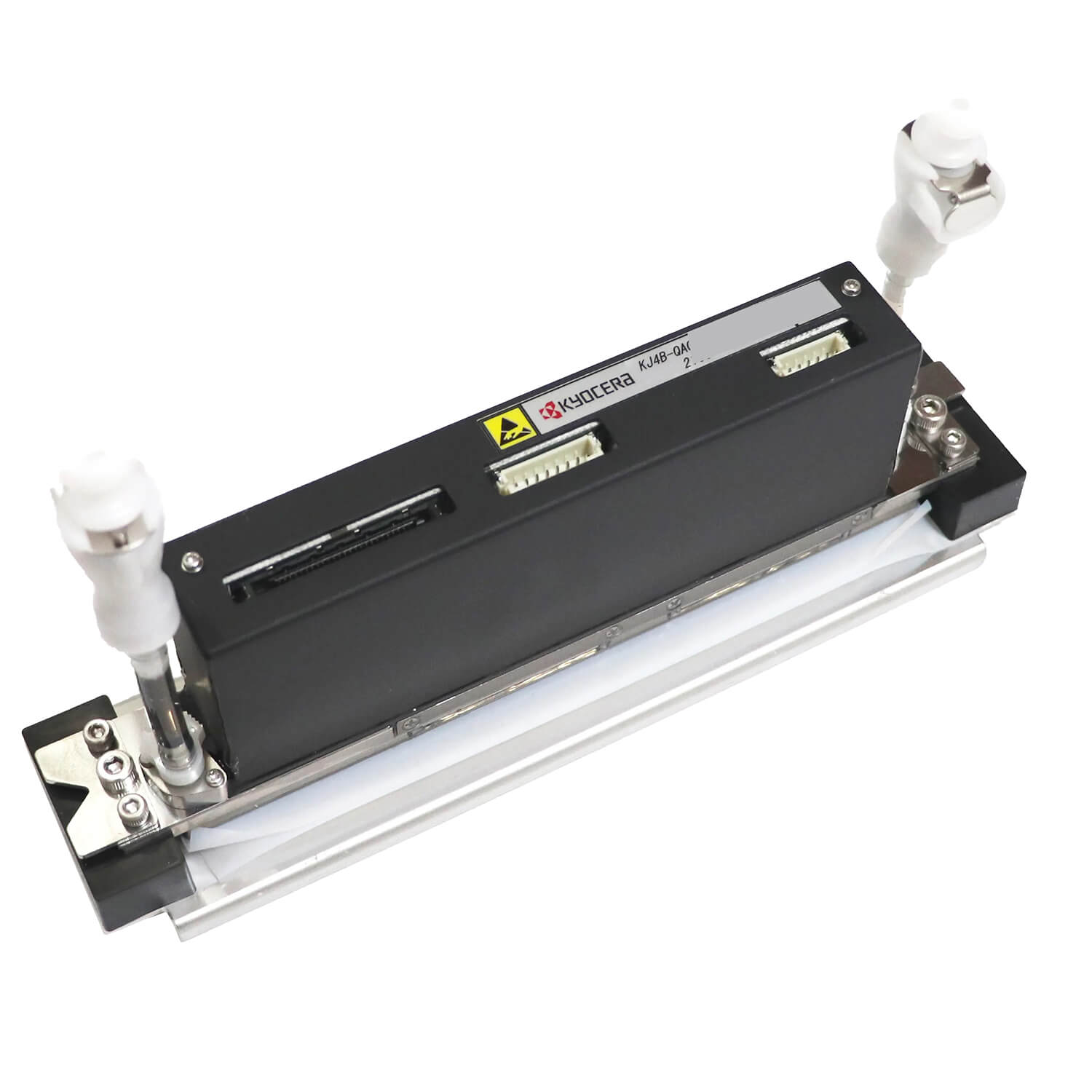
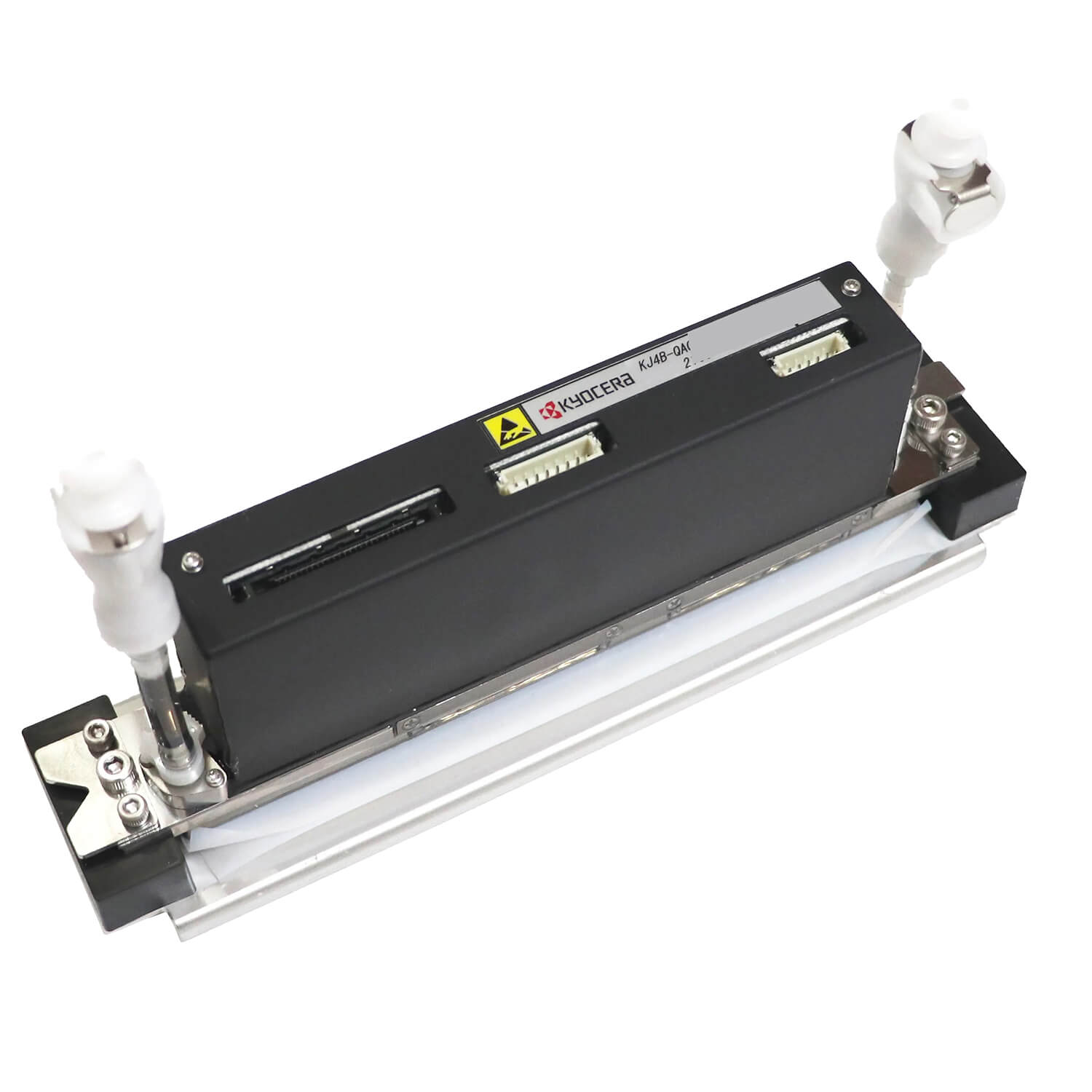
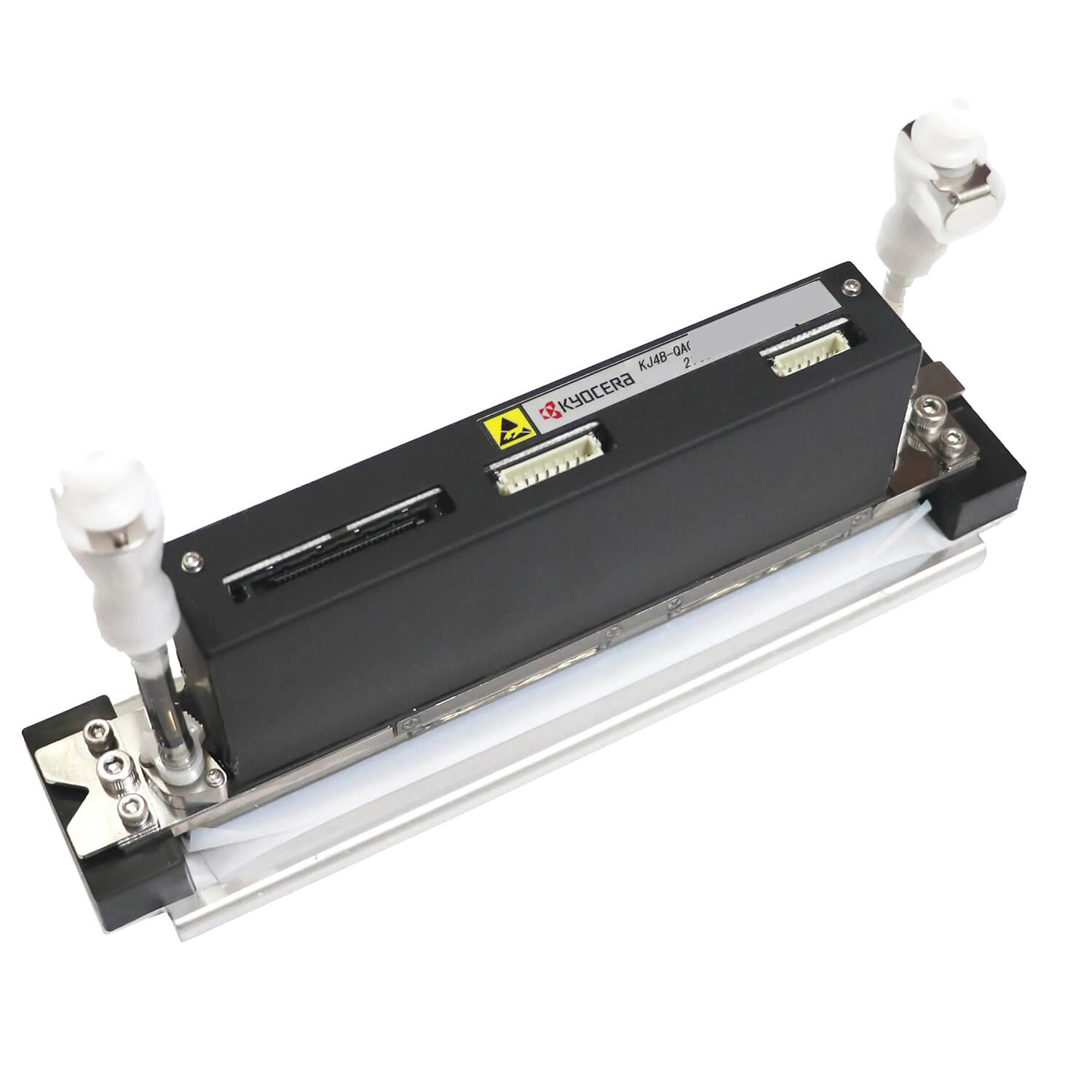
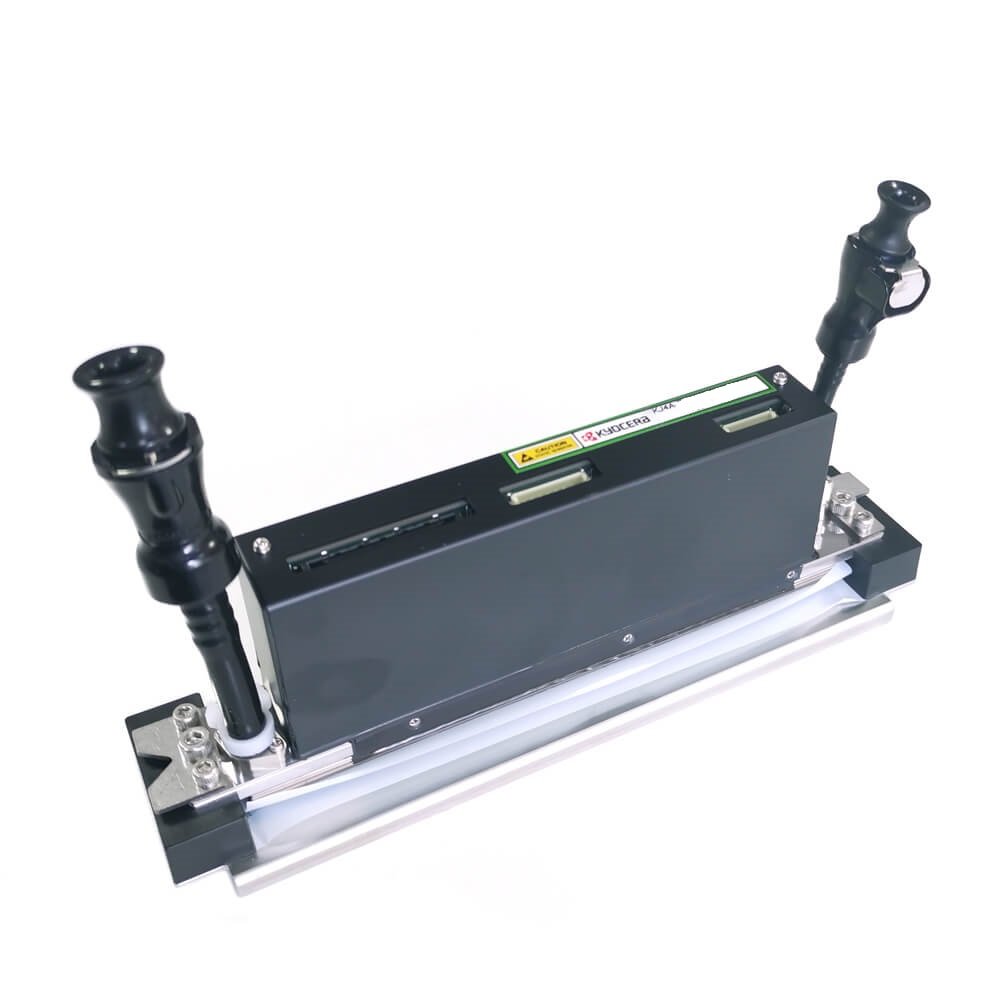
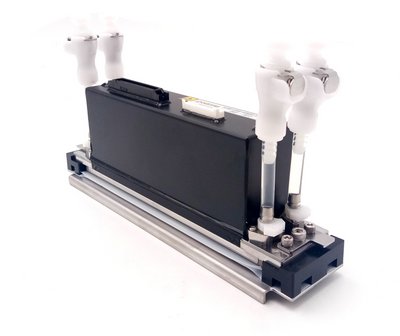
printerhead
Kyocera KJ4B-0300 Printhead KJ4B-0300-RO6DS-STD1
- Brand
- Kyocera
- Model
- KJ4B-0300-RO6DS-STD1
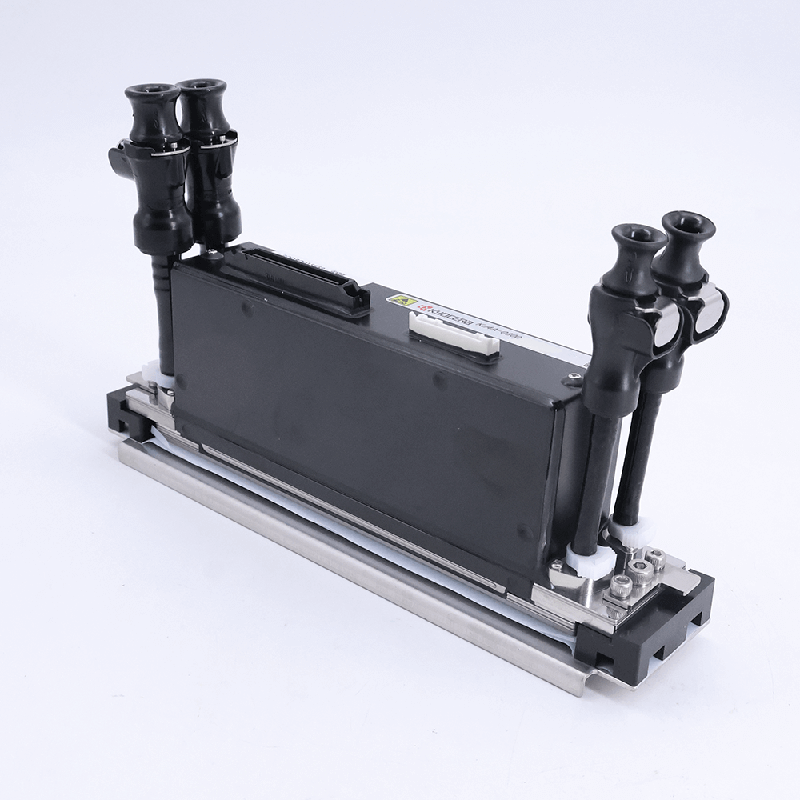
printerhead
Kyocera KJ4A-0300 Printhead KJ4A-0300-Q06DS-WIT1
- Brand
- Kyocera
- Model
- KJ4A-0300-Q06DS-WIT1
FAQ
What industries are Kyocera printheads used in?
Kyocera printheads are used across a wide range of industrial applications, including corrugated and packaging printing, textile printing, label printing, ceramic tile decoration, commercial printing, signage, 3D printing, and functional printing. The KJ4 family includes different variants for specific applications: KJ4A is mainly designed for UV and high-viscosity inks, KJ4B is optimized for high-speed water-based printing, while KJ4C is designed for high-viscosity oil-based inks and applications requiring ink recirculation and high ink deposition.
Which Kyocera printhead should I choose — KJ4A or KJ4B?
The choice mainly depends on the ink system and printing application. KJ4A is primarily designed for UV and higher-viscosity inks, with variants such as KJ4A-AA (3 pl), KJ4A-TA (6 pl), KJ4A-RH (5 pl), and KJ4A-0300 (4–14 pl) covering applications from labels and signage to high-speed single-pass printing. KJ4B is optimized for water-based inks and is widely used in textile and other high-speed aqueous printing systems, with models such as KJ4B-0300 and KJ4B-QA. KJ4A and KJ4B share a 2,656-nozzle architecture, 108.25 mm print width, and 600 dpi resolution, but their ink compatibility and application focus are different.
Which KJ4B variant should I order for a standard machine, MS Italy, or EFI Reggiani printer?
KJ4B-0300 and KJ4B-QA are available in different configurations for specific printer platforms. The Standard version is used with compatible systems such as Xerox Rialto, Atexco Vega, Printerevolution, FabriVu, and Hanway. MS variants are configured for MS Italy machines, while EFI Reggiani versions are designed for Reggiani systems. Although the core printhead technology is similar, the cable configuration and machine interface can differ. Always provide your printer brand and model before ordering to ensure the correct version.
How do drop size and firing frequency affect KJ4B-QA performance?
KJ4B-QA supports variable drop volumes of 5 pl, 7 pl, 12 pl, and 18 pl. The 5–12 pl settings can operate at up to 30 kHz, providing higher productivity and finer control. The 18 pl option operates at a lower maximum frequency of around 20 kHz, but provides greater ink deposition. In textile printing, smaller drops are generally preferred for fine details, while larger drops are useful for areas requiring heavier ink coverage.
What do the internal filter and reservoir heater do in a Kyocera printhead?
The internal filter helps capture particles and pigment agglomerates before they reach the nozzle area, reducing the risk of blockage. The built-in reservoir heater and temperature sensor help maintain a stable ink temperature and viscosity inside the printhead. Together, these features support more consistent ink jetting, particularly when printing with demanding or temperature-sensitive inks.